
AI Glossary
Clear, authoritative definitions for every key concept on your AI learning journey — from tokens and embeddings to agents and alignment.
🖼️ Topic Diagrams & Visual Infographics
High-resolution conceptual architecture diagrams and infographics organized by topic to visually master how LLMs process tokens, vectors, and matrices.
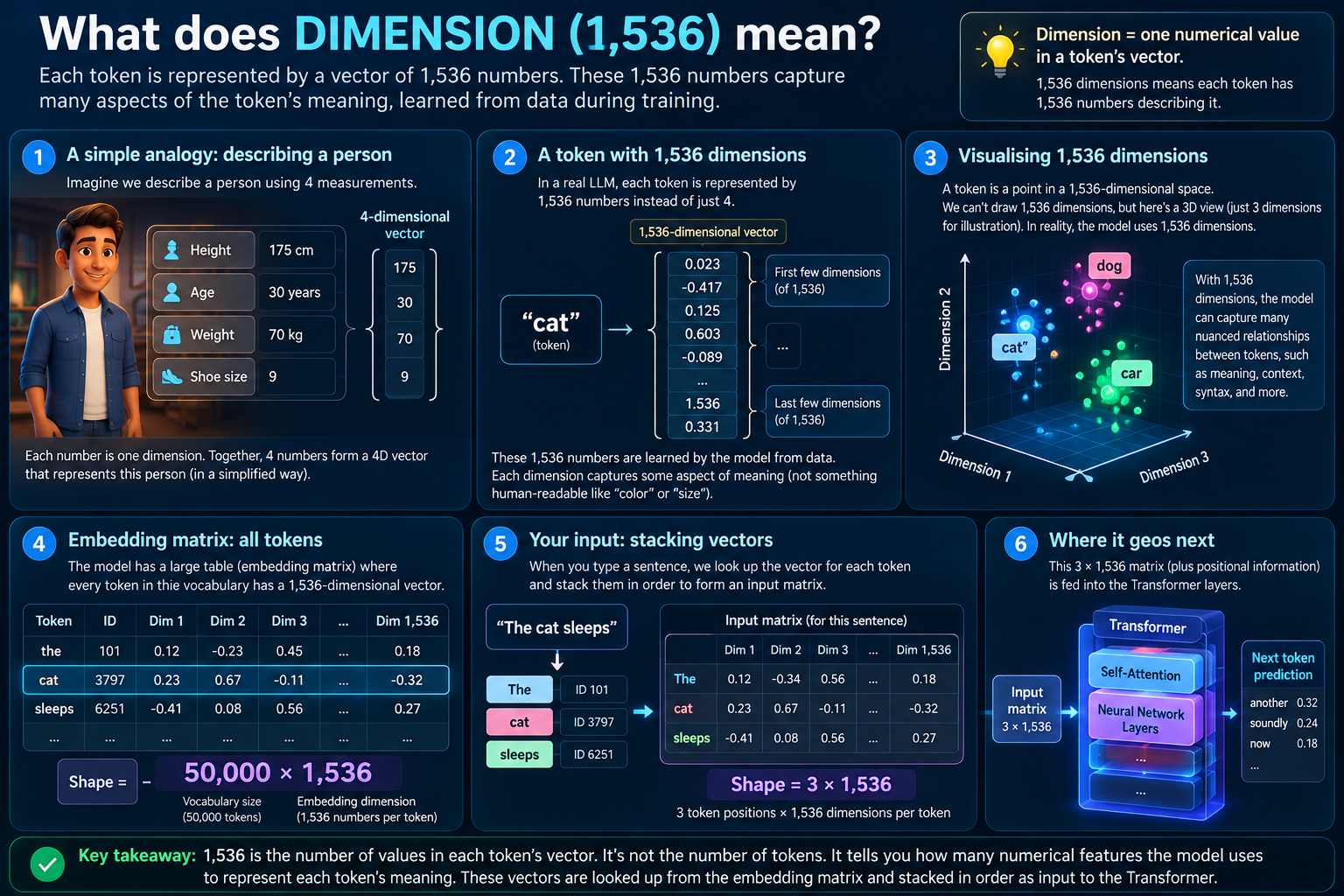
6-step visual guide: 4D person analogy (height, age, weight, shoe size), 1,536D token vector for "cat", 3D vector space visualization, 50,000 × 1,536 embedding matrix, and 3 × 1,536 input matrix stacking for the Transformer.
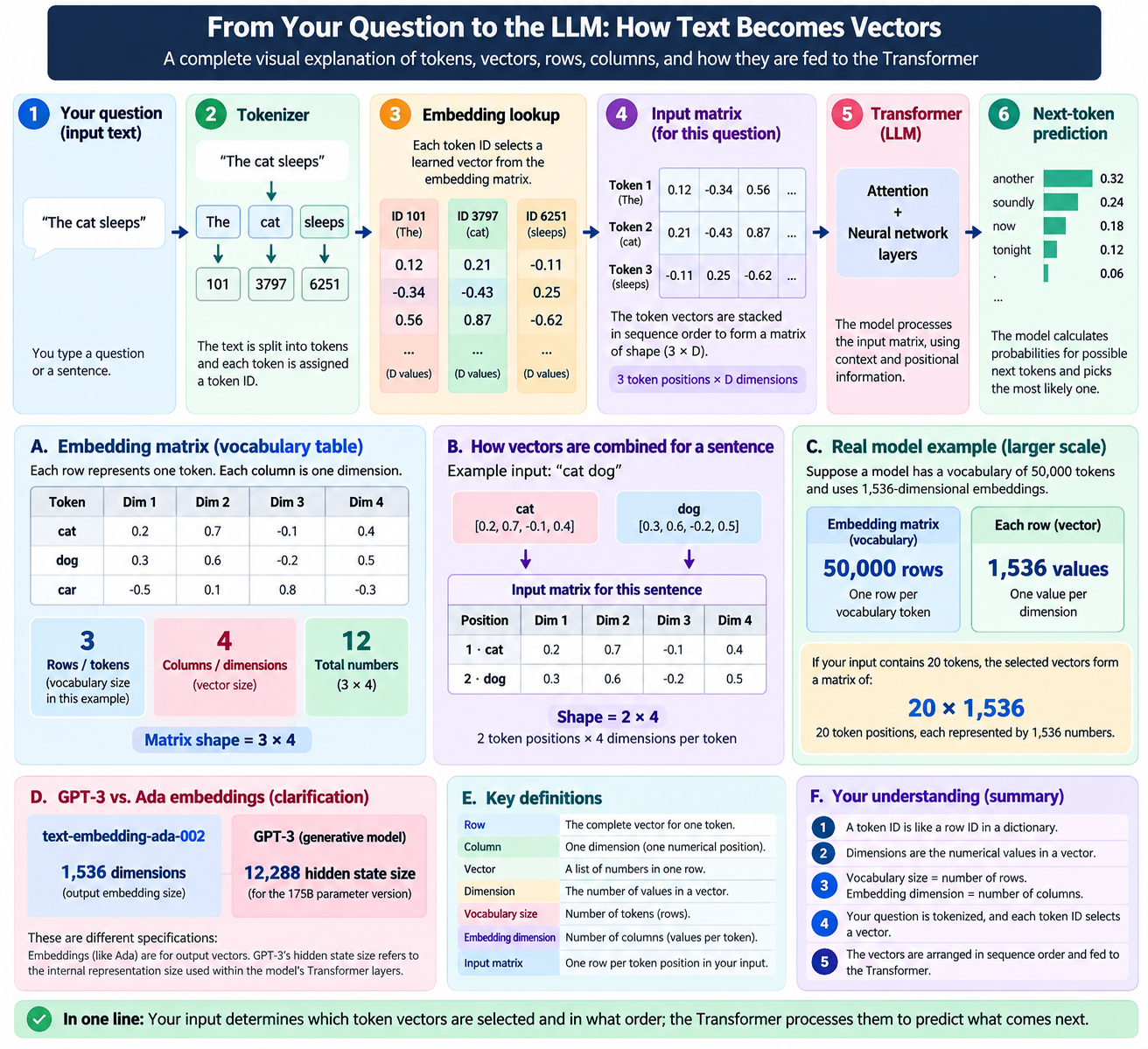
Complete end-to-end flow from input text "The cat sleeps" → token IDs → 3×4 mini-matrix → 50,000×1,536 real-scale embedding table → Transformer next-token prediction with Ada vs GPT-3 comparison.
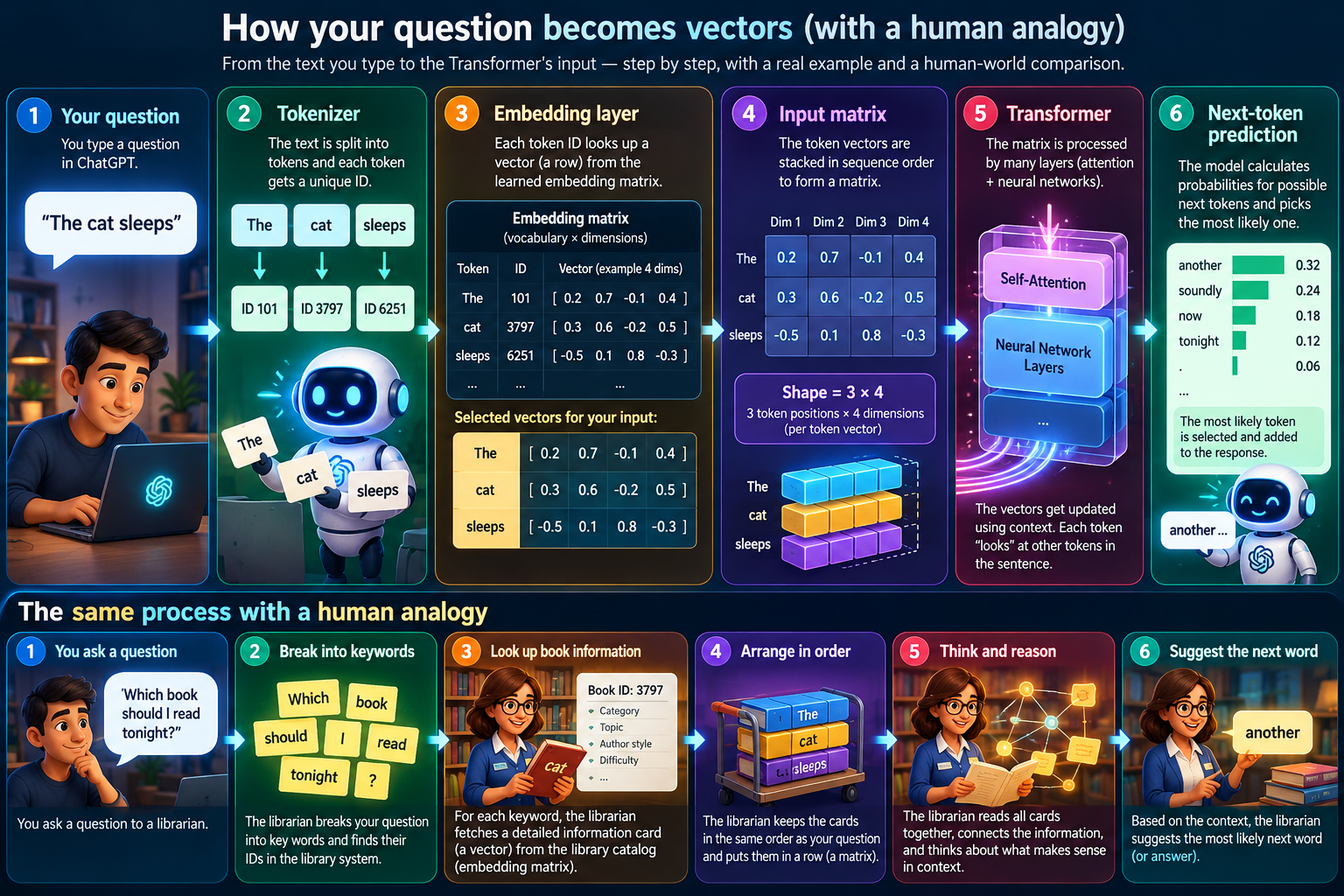
Intuitive side-by-side comparison explaining the 6 AI pipeline steps (tokenization, lookup, matrix formation, attention) alongside a human librarian looking up book catalog cards.
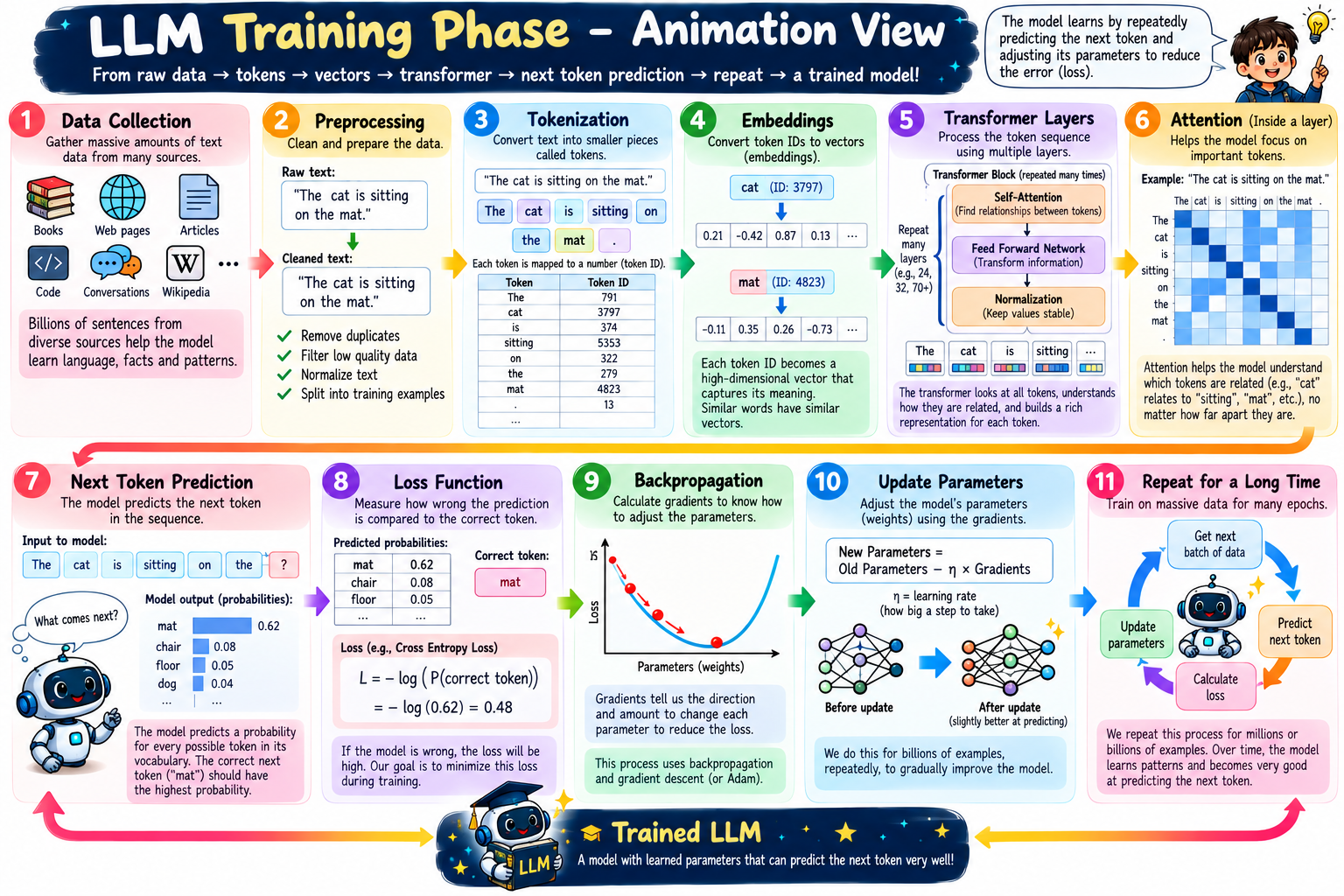
Comprehensive 11-step architectural roadmap covering data filtering, tokenizer training, pretraining objectives, attention layers, post-training alignment (SFT, RLHF), and generation.
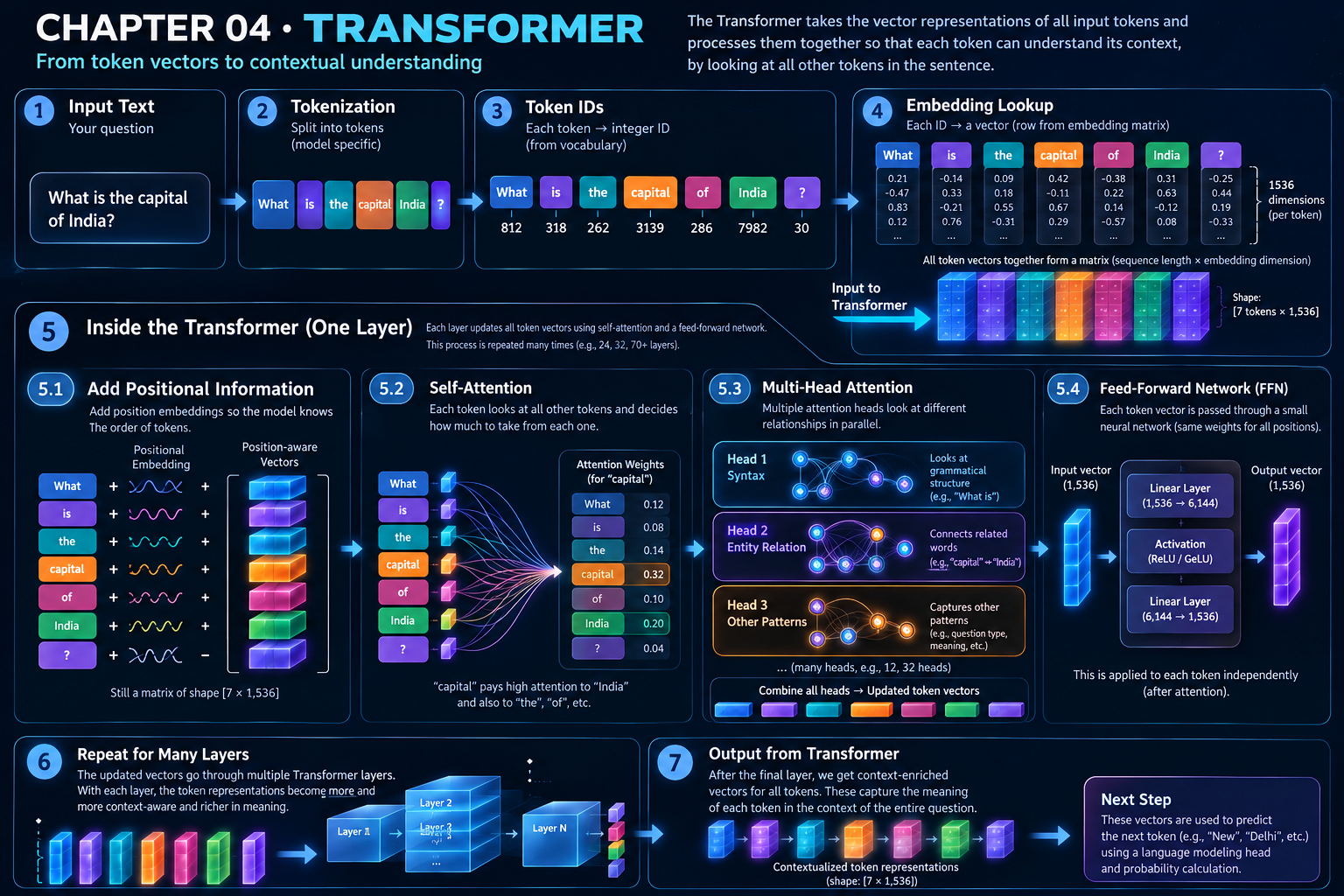
7-stage end-to-end breakdown: Tokenization, Token IDs, 1,536D embedding matrix lookup, Positional Encoding, Multi-Head Attention (Syntax & Entity Relations), FFN ($1,536 \to 6,144 \to 1,536$), and Layer Stacking to Contextual Output.
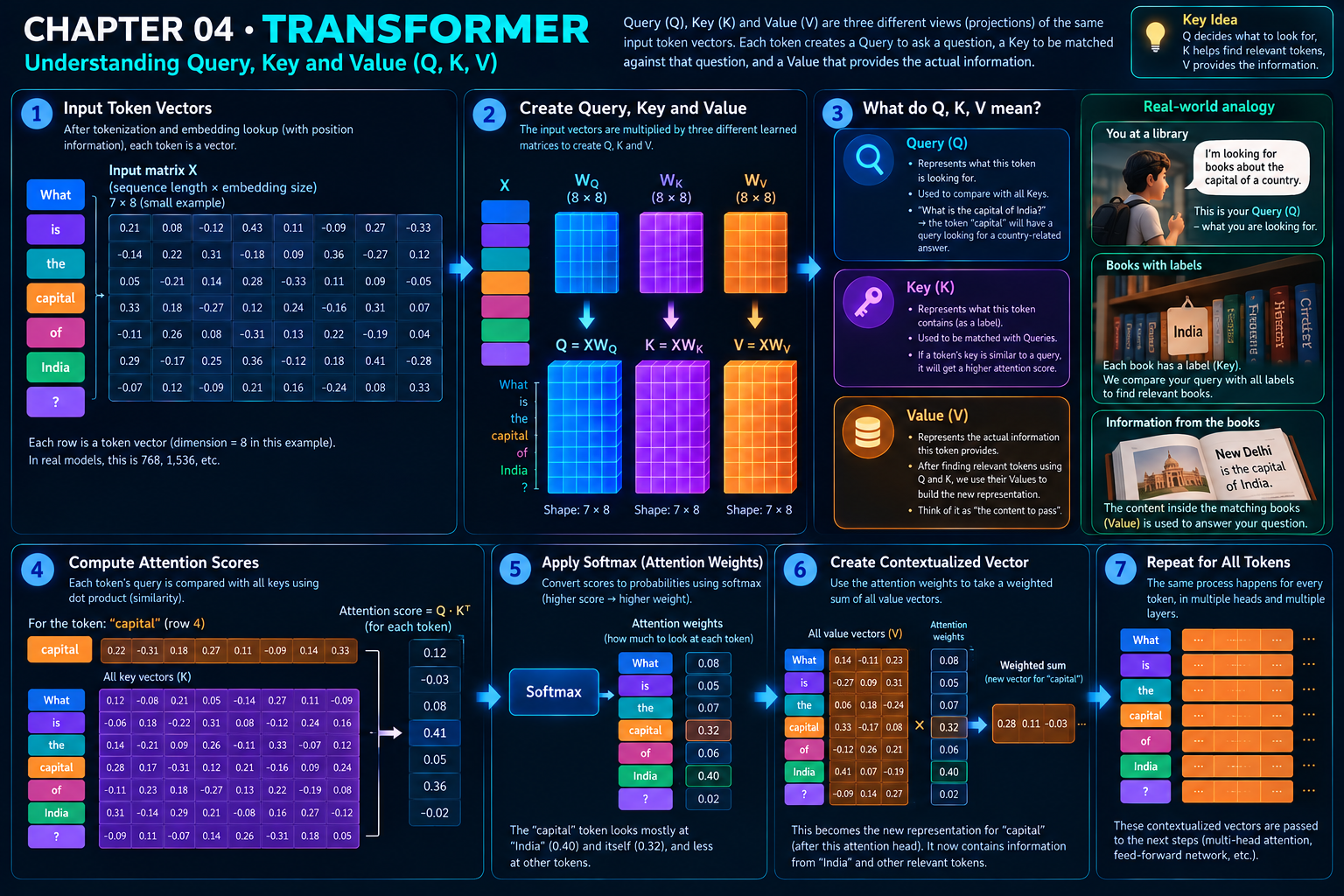
7-stage visual breakdown: Matrix projection ($Q = XW_Q, K = XW_K, V = XW_V$), Library analogy, dot-product similarity ($Q \cdot K^T$), Softmax attention weights, and contextual value assembly.
No terms found matching your search.
Try a different keyword or clear filters.